MedChat
MedChat
Harnessing AI for Communication Training in Medical Education
Project Overview
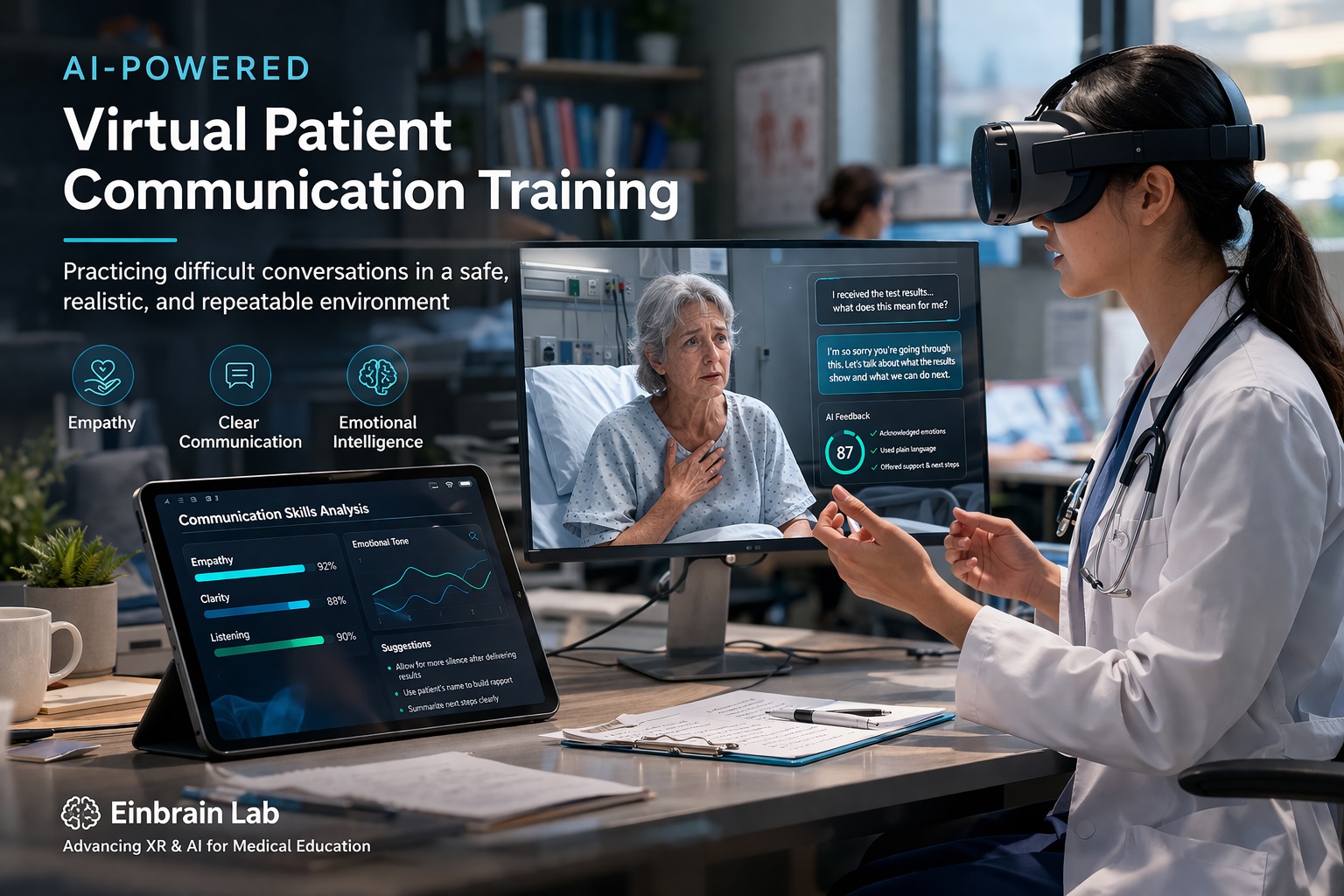
MedChat is an AI-powered virtual patient platform developed by Einbrain Lab to help medical students master one of the most challenging aspects of clinical care: delivering bad news. Through natural language conversations, students interact with a realistic virtual patient in emotionally charged scenarios, building empathy, clarity, timing, and emotional intelligence in a safe, controlled, and fully repeatable environment.
Early pilot results have been promising, demonstrating measurable improvements in student confidence and communication competence. Looking ahead, the project is advancing toward full VR-based virtual patient systems to create even more authentic and emotionally engaging training experiences in lifelike clinical settings.
Team & Partnership
Einbrain Lab — Dr. Donggil Song
SHSU College of Osteopathic Medicine
Zhao, Y., Nelson, K., Song, D., & Zarutskie, P.
Publications & Presentations
📄 Journal Article
*Chiu, J., *Castro, B., *Ballard, I., Nelson, K., Zarutskie, P., Olaiya, K., Song, D., & Zhao, Y. (2025). Exploration of the role of ChatGPT in teaching communication skills for medical students: A pilot study. Medical Science Educator, 35, 1871–1882. https://doi.org/10.1007/s40670-025-02394-9
🎤 Presentations
- Zhao, Y., Nelson, K., Zarutskie, P., Olaiya, K., Song, D., *Castro, B., *Chiu, J., & *Ballard, I. (2025, Apr.). Exploration of utilizing artificial intelligence for medical students communication skills learning. Educating Leaders 2025, American Association of Colleges of Osteopathic Medicine (AACOM), Arlington, Texas.
- *Castro, B., *Chiu, J., *Ballard, I., Olaiya, K., Song, D., Nelson, K., Zarutskie, P., & Zhao, Y. (2024, Mar.). Exploration of utilizing artificial intelligence for medical students communication skills learning. 12th Annual Latino Medical Student Association (LMSA) Southwest Regional Conference Research Symposium, Houston, Texas.
- *Chiu, J., *Castro, B., *Ballard, I., Song, D., Olaiya, K., & Zhao, Y. (2023, Sep.). Evaluate perceived learning and confidence levels in delivering difficult news using artificial intelligence-based activity. Annual Student Research Day, College of Osteopathic Medicine, Sam Houston State University, Huntsville, Texas.
- Zhao, Y., Nelson, K., Song, D., & Zarutskie, P. (2026, Mar.). Harnessing AI for Communication Training in Medical Education: Pilot to Practice. Engage-Ed Conference 2026, Sam Houston State University, Huntsville, Texas.
* Student author/presenter
Why MedChat Matters
The Challenge
Medical students rarely get safe, repeatable opportunities to practice delivering bad news before facing real patients — a high-stakes skill requiring empathy, clarity, and structure under emotional pressure.
Our Solution
MedChat places students in AI-driven virtual patient encounters — starting with screen-based simulation and advancing toward full VR immersion — offering scenario-based practice and evidence-based feedback via the SPIKES framework.
The Impact
Pilot results show measurable gains in student confidence and communication competence — bridging the gap between classroom theory and real-world clinical practice.
MedChat in Action
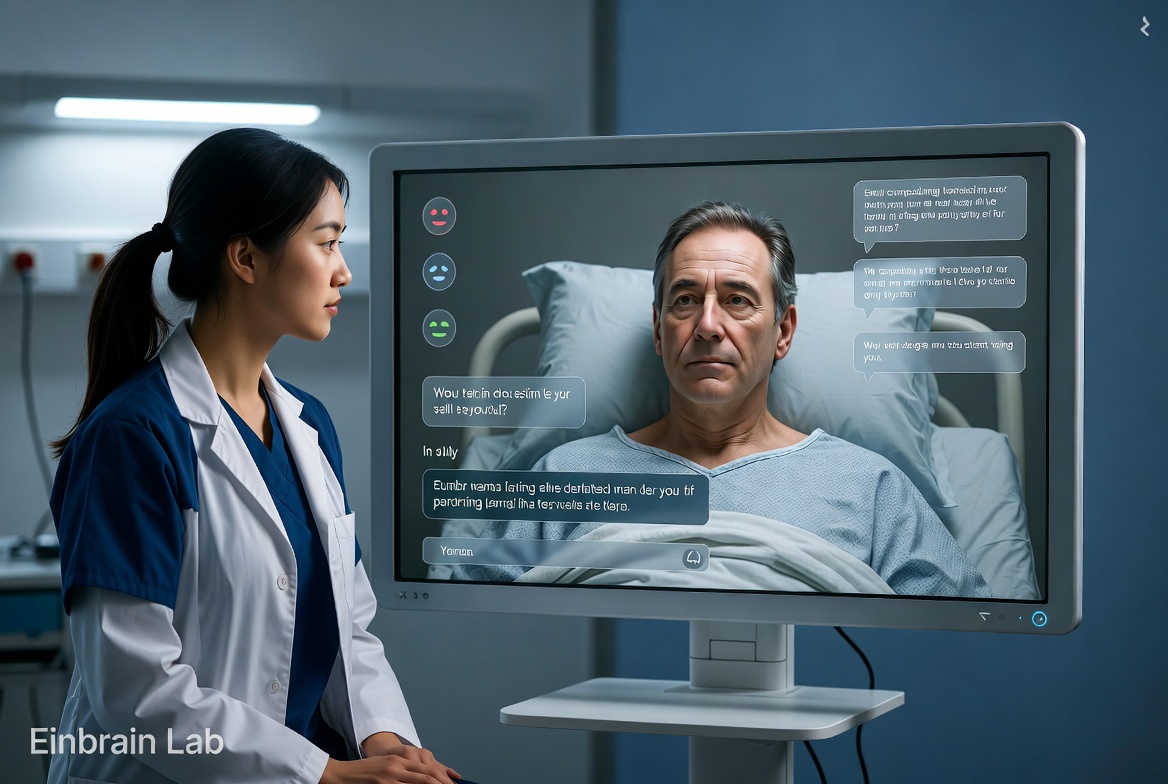
A medical student engages in a simulated patient consultation through a large immersive display. The AI virtual patient responds naturally in emotionally charged scenarios, creating a realistic clinical encounter that builds confidence and communication skill before entering the clinic.
Training Scenarios
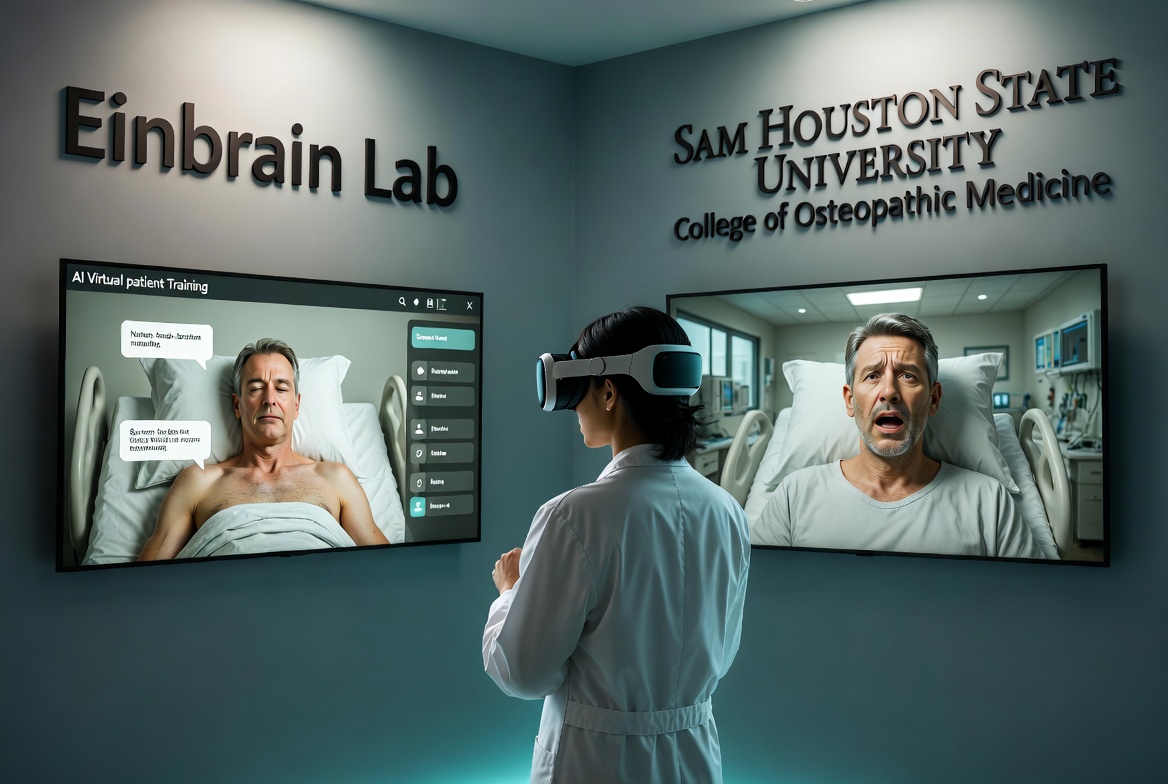
Institutional Collaboration: Einbrain Lab and SHSU College of Osteopathic Medicine partner to bring VR-based communication training directly into medical education — combining clinical expertise with cutting-edge AI and XR technology.
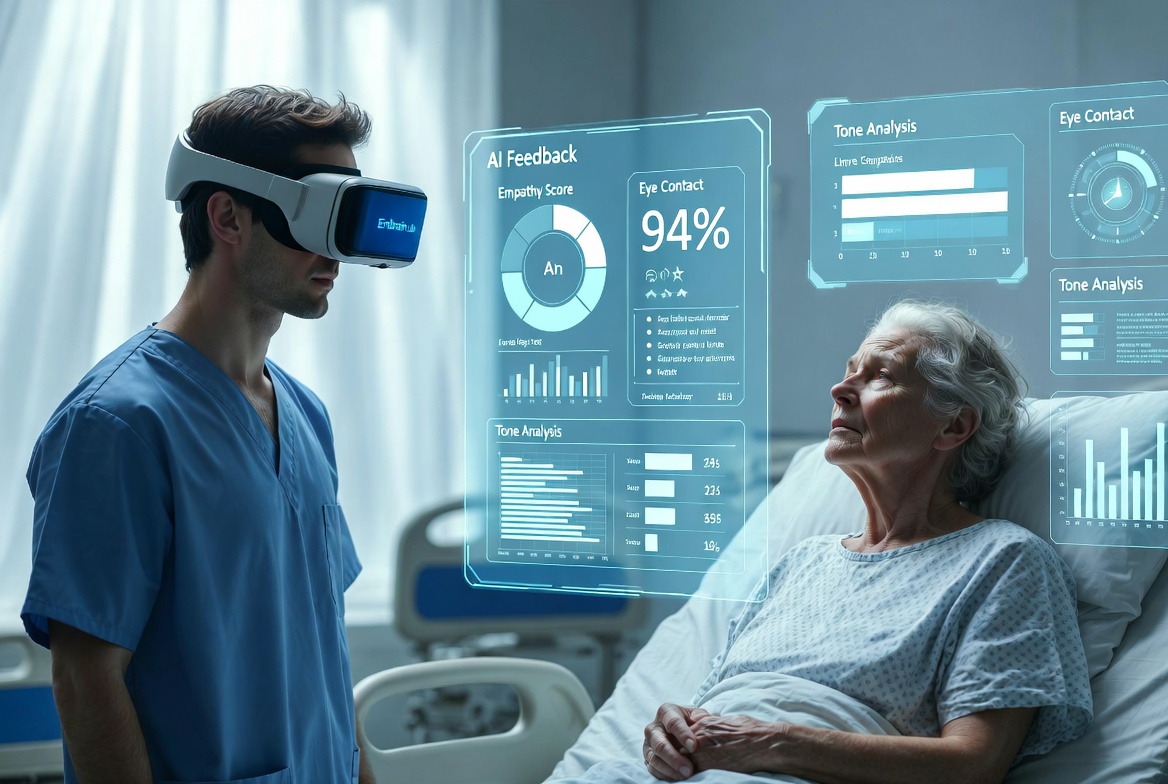
VR Simulation & Feedback: A student interacts with the virtual patient in VR while the system evaluates communication in real time, providing structured, actionable feedback aligned with the SPIKES framework.
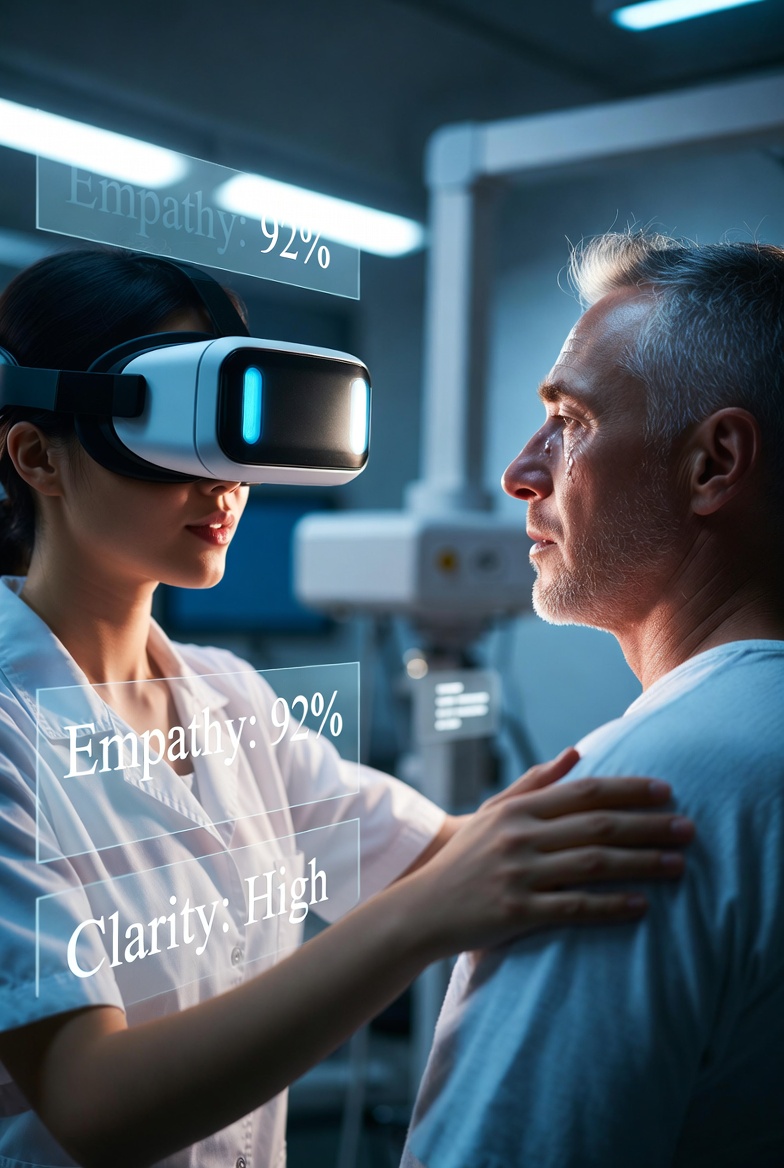
Inclusive Practice: MedChat supports all learners with adaptive AI responses and personalized feedback — helping each student develop their unique communication voice with confidence.
Key Features
AI Virtual Patient
Students converse naturally with a realistic AI patient in emotionally charged clinical scenarios, developing empathy, clarity, and timing in a safe, repeatable environment.
SPIKES-Based Feedback
Receive structured, personalized feedback aligned with the SPIKES framework — the gold standard for breaking bad news — after every simulation session.
Path to VR
The next phase advances into full VR immersion — lifelike clinical environments with heightened emotional presence and realism to push training fidelity even further.
Einbrain Lab in partnership with SHSU College of Osteopathic Medicine | Contact: einbrainlab@gmail.com